
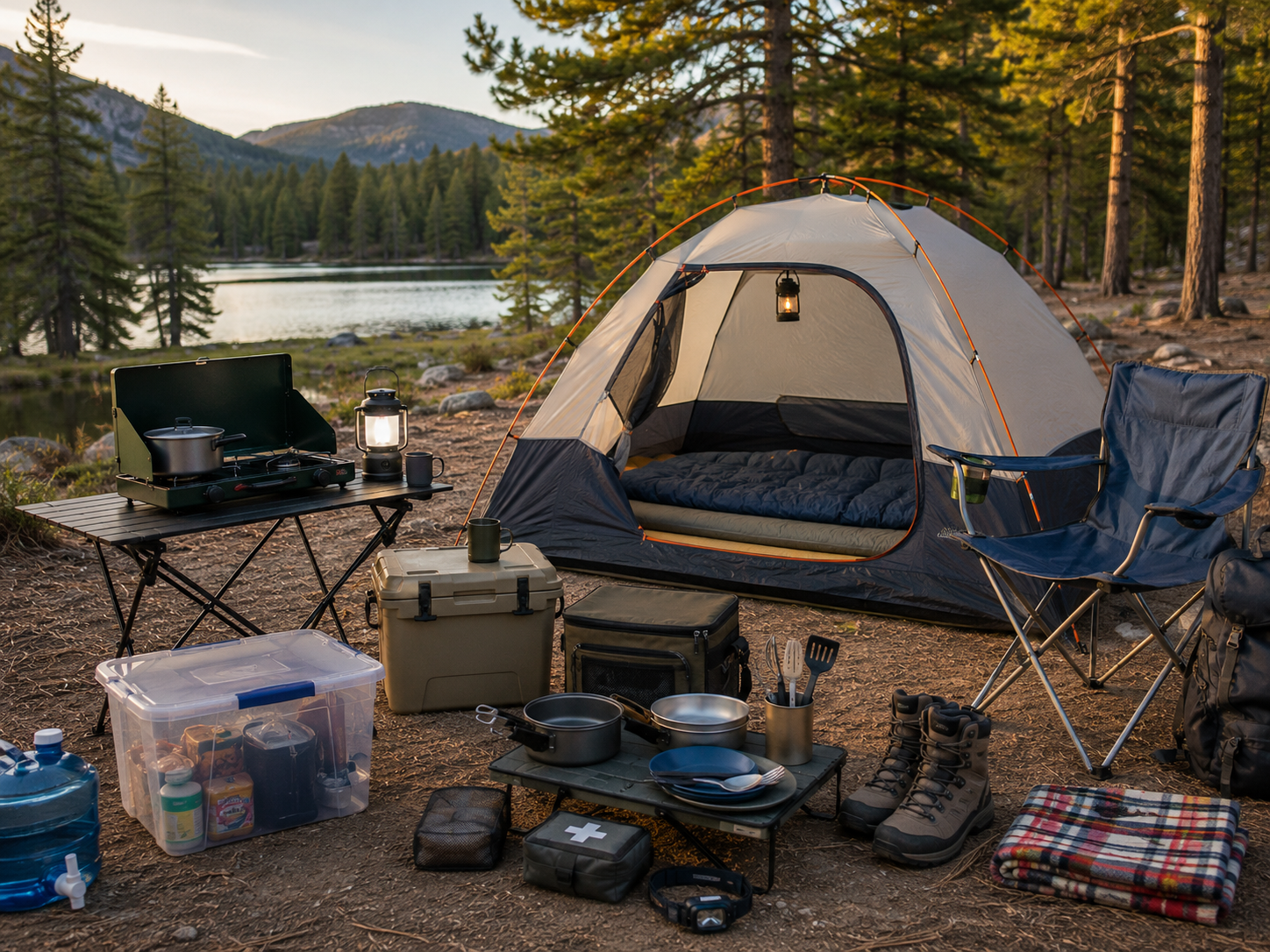
Camping for the first time can feel more complicated than it needs to be.
You search for a basic packing list, and suddenly you are looking at dozens of products: tents, sleeping pads, lanterns, camp tables, coolers, water filters, power stations, folding cabinets, specialty cookware, and gadgets you are not even sure you will use.
The good news is that your first camping trip does not require a garage full of outdoor gear.
What matters most is having the essentials that keep you sheltered, comfortable, fed, hydrated, and prepared for the conditions you are likely to encounter. Everything else can be added later once you understand how you actually like to camp.
This guide walks through the camping essentials beginners should focus on first, what you can skip for now, and which pieces of gear are worth choosing carefully.
Start With the Type of Camping You Are Doing
Before buying anything, think about where you will camp and how you will get there.
A beginner staying at an established campground next to a parked car has very different gear needs from someone hiking several miles into the backcountry.
For most first-time campers, car camping at an established campground is the easiest place to begin.
You can bring more comfortable gear, carry extra food and water, and keep backup items in your vehicle. Many campgrounds also provide picnic tables, fire rings, restrooms, and access to drinking water.
That means you can focus on a relatively simple setup instead of preparing for every possible outdoor situation.
1. A Tent That Fits Your Group Comfortably
Your tent is one of the most important pieces of camping equipment you will buy.
For a first trip, you usually do not need the lightest or most technical tent available. You need something that is easy to set up, offers reasonable weather protection, and gives everyone enough room to sleep comfortably.
One common mistake is buying a tent based only on the number printed on the package.
A “4-person tent” may technically fit four sleeping bodies, but there may be very little room left for bags, shoes, or moving around.
For car camping, choosing a tent rated for one or two more people than will actually sleep inside often makes the experience more comfortable.
A couple, for example, may prefer a 3- or 4-person tent instead of a compact 2-person model.
Features Worth Looking For
Consider:
- Simple pole structure
- Good ventilation
- A rainfly
- A waterproof floor
- Interior storage pockets
- A vestibule for shoes or gear
- Enough standing or sitting height for your comfort
For your first few trips, ease of setup is usually more valuable than saving a small amount of packed weight.
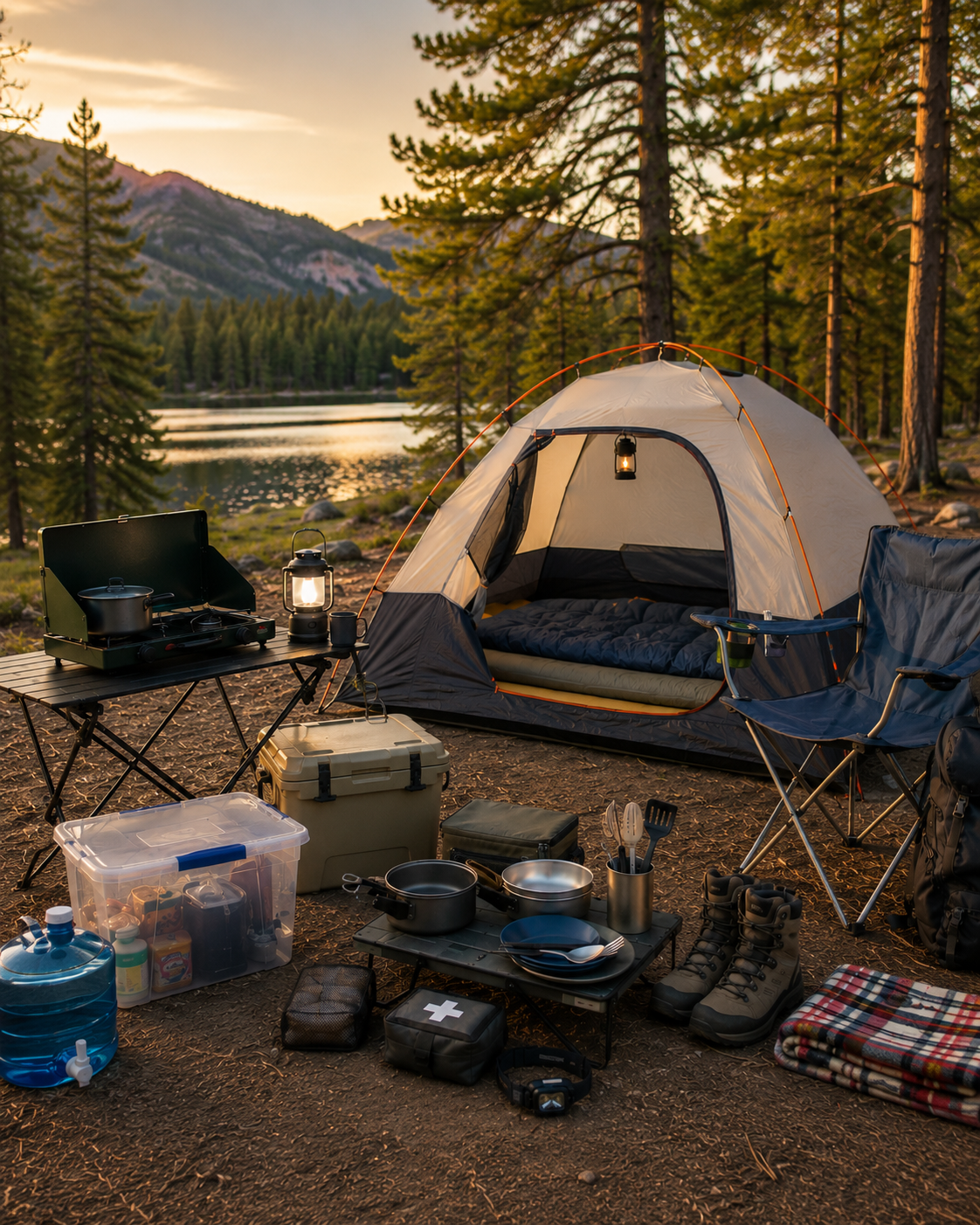
2. A Sleeping Bag Appropriate for the Weather
A sleeping bag helps keep you warm by trapping body heat around you.
The key number to understand is the temperature rating.
Do not assume that a sleeping bag labeled for 30°F will automatically feel comfortable to everyone at 30°F. Temperature ratings are useful guidelines, but individual comfort varies.
For beginner camping, choose a bag that provides some margin below the expected overnight temperature.
If the forecast says nighttime temperatures will be around 50°F, using a sleeping bag designed for cooler conditions generally gives you more flexibility than bringing a very lightweight warm-weather bag.
Also consider shape.
Rectangular sleeping bags provide more room to move and work well for many car campers. Mummy-style bags are more efficient at retaining warmth but feel more restrictive.
You do not need to choose the most technical option. Choose the one that matches your weather and sleeping preferences.
3. A Sleeping Pad or Air Mattress
Many first-time campers focus heavily on the sleeping bag and underestimate the importance of what goes underneath it.
The ground can feel surprisingly cold and uncomfortable even when the air temperature is mild.
A sleeping pad does two jobs:
- It cushions your body from the ground.
- It provides insulation between you and the cold surface below.
For car camping, you have several options.
Foam Pads
Simple, durable, inexpensive, and almost impossible to damage.
Self-Inflating Pads
A good balance between comfort, insulation, and compact storage.
Inflatable Sleeping Pads
Often more comfortable and pack smaller, although they can be punctured.
Camping Air Mattresses
Very comfortable for some campers and useful when space and weight are not major concerns.
If you choose an air mattress, remember that you may also need a pump.
For most first-time campers, comfort matters more than minimizing weight.
A poor night’s sleep can make an otherwise enjoyable camping trip feel miserable.
4. Comfortable Bedding Extras
A few familiar comfort items can make a major difference.
At minimum, consider bringing:
- A camping pillow or pillow from home
- An extra blanket
- Comfortable sleep clothes
- Warm socks for cool nights
You do not have to buy specialized versions of everything immediately.
If you are camping next to your car, bringing a regular pillow and an extra blanket from home is perfectly reasonable.
Upgrade later if you decide you camp often enough to justify more compact equipment.
5. A Reliable Light Source
Once the sun goes down, even a familiar campsite becomes difficult to navigate.
Every camper should have access to a reliable light source.
A headlamp is particularly useful because it keeps both hands free while you cook, organize gear, walk to the restroom, or set up equipment after dark.
A lantern is useful for lighting a table or the interior of a tent.
For a beginner setup, having both works well:
- One headlamp per person
- One lantern for the campsite
Rechargeable lights are convenient, but always check their battery level before leaving home.
If your trip lasts several days, bring backup batteries or a charging option where appropriate.
6. Camping Chairs
Not every campground provides comfortable seating.
Even when there is a picnic table, you may not want to sit on a wooden bench all evening.
Basic folding camping chairs are inexpensive, easy to pack, and useful around the fire, beside the tent, or while relaxing during the day.
You do not need premium chairs for your first trip.
Look for:
- Stable construction
- Comfortable seat height
- Cup holder or side pocket
- Easy folding design
- Weight capacity appropriate for the user
Comfort becomes especially important if you plan to spend several hours sitting around camp.
7. Drinking Water and a Water Container
Never assume that drinking water will automatically be available at your campsite.
Check campground information before leaving home.
For established campgrounds with potable water, you may only need refillable bottles and a container for carrying water back to camp.
For locations without drinking water, you will need to bring enough water for:
- Drinking
- Cooking
- Coffee or tea
- Cleaning
- Basic hygiene
A reusable water container with a spigot can be extremely convenient around camp.
It reduces repeated trips to a water source and creates a simple hand-washing or cooking station.
If you are unsure about water availability, bring more than you think you will need.
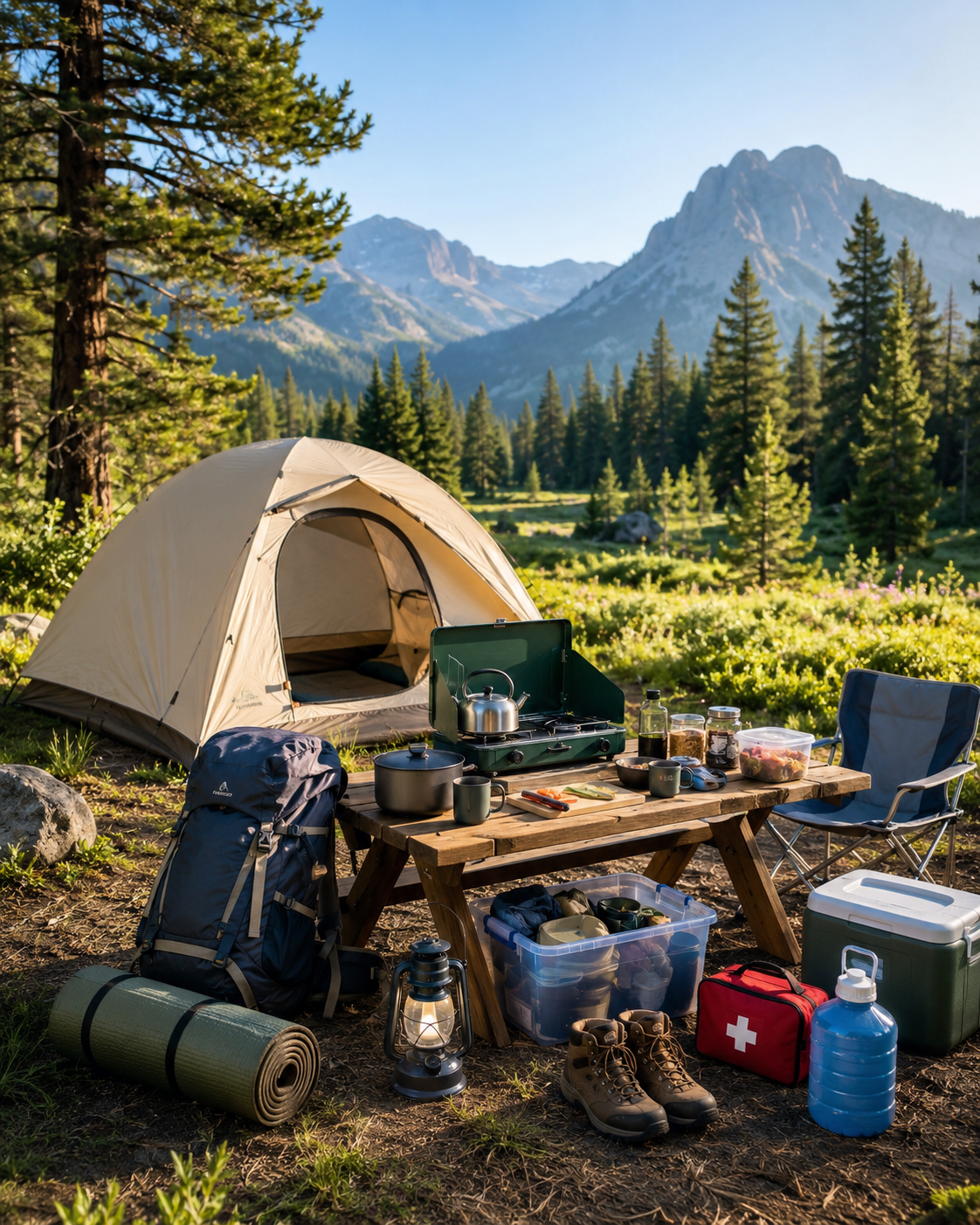
8. A Cooler for Perishable Food
If your camping meals include meat, dairy products, eggs, or other perishable foods, you need a reliable way to keep them cold.
For most beginner car camping trips, a standard insulated cooler is sufficient.
A few habits make a large difference:
- Chill food before packing it.
- Cool the cooler before loading it if possible.
- Use enough ice or frozen packs.
- Keep drinks and frequently accessed items separate when practical.
- Open the cooler only when necessary.
- Keep it out of direct sun.
You do not necessarily need an expensive high-performance cooler for a short weekend trip.
Choose based on trip length, weather, group size, and how often you expect to camp.
9. A Simple Camp Cooking Setup
Your first camp kitchen does not need to look like a portable restaurant.
Start simple.
For many campers, the basic setup is:
- Camping stove
- Fuel
- Lighter or matches
- One frying pan
- One pot
- Cooking utensil
- Knife
- Cutting board
- Plates or bowls
- Cups
- Forks and spoons
You may already own several of these items at home.
There is no need to buy dedicated camping cookware until you know which pieces are useful for your style of camping.
Why a Camping Stove Is Useful
Campfires are enjoyable, but they are not always reliable for cooking.
Fire restrictions, rain, damp wood, campground rules, or lack of firewood can make them impractical.
A camping stove gives you a predictable cooking method and makes simple meals much easier.
Always use camping stoves outdoors in accordance with the manufacturer’s instructions.
10. Food That Is Easy to Prepare
Your first camping trip is probably not the ideal time to test complicated outdoor recipes.
Simple meals allow you to spend more time enjoying camp and less time washing cookware.
Good beginner-friendly options include:
- Sandwiches
- Hot dogs
- Burgers
- Pre-cut vegetables
- Pasta
- Breakfast burritos
- Oatmeal
- Eggs
- Soup
- Pre-cooked meals that only need reheating
Snacks are equally important.
Bring foods that are easy to grab during hikes, setup, or long afternoons at camp.
11. Food Storage Containers
Loose food packaging quickly creates clutter.
A few sturdy containers or bins can help organize:
- Dry food
- Snacks
- Cooking supplies
- Coffee supplies
- Utensils
- Cleaning items
Clear storage bins are especially useful because you can see what is inside without unpacking everything.
If you are camping in an area with wildlife, follow local food-storage requirements carefully.
Some areas require food to be stored in specific lockers or bear-resistant containers.
Never assume that keeping food inside your tent is safe.
12. Basic Cleaning Supplies
Cleaning at camp does not require a large collection of products.
A simple kit might include:
- Biodegradable soap where appropriate
- Sponge
- Small towel
- Trash bags
- Paper towels or reusable cloths
- Dishwashing basin or small tub
Follow campground rules for disposing of wastewater.
Do not dump food scraps or dirty dishwater next to your tent.
Keeping the campsite clean also helps reduce insects and wildlife problems.
13. A Basic First-Aid Kit
Small cuts, scrapes, burns, blisters, and insect bites can happen even during easy camping trips.
Keep a basic first-aid kit somewhere easy to reach.
A simple kit may include:
- Adhesive bandages
- Gauze
- Medical tape
- Antiseptic wipes
- Blister treatment
- Tweezers
- Any personal medications you need
The purpose is not to prepare for every possible medical emergency.
It is to handle common minor problems while making sure you have a plan for obtaining professional help when needed.
14. Sun and Insect Protection
These small items are easy to forget and uncomfortable to go without.
Pack:
- Sunscreen
- Insect repellent
- Sunglasses
- Hat
Depending on the location and season, mosquitoes can quickly change the mood of an evening around camp.
Keeping repellent somewhere visible makes it much more likely that everyone will actually use it.
15. Weather-Appropriate Clothing
Outdoor temperatures can change quickly, especially after sunset.
Instead of packing one heavy outfit, use layers.
A simple system might include:
- Lightweight base layer
- Warm mid-layer
- Weather-resistant outer layer
Bring an extra pair of socks and appropriate footwear.
If rain is possible, bring rain protection even if the forecast looks relatively good.
Keeping one dry set of clothes inside the tent or vehicle can also be useful.
16. A Small Tool and Repair Kit
You do not need a large toolbox, but a few simple repair items can solve annoying campsite problems.
Consider packing:
- Multi-tool
- Duct tape
- Tent repair patches
- Extra cord
- Small scissors
- Spare tent stakes
A broken strap, torn tent fabric, or missing stake does not have to ruin your trip if you can make a temporary repair.
17. A Power Bank
Phones are useful for navigation, weather information, emergency communication, photos, and campground reservations.
A small portable power bank is enough for many short trips.
You probably do not need a large portable power station for your first weekend unless you have specific equipment that requires one.
Start with what you actually need to recharge.
Upgrade later if your camping style involves longer trips, multiple devices, powered coolers, photography equipment, or other electronics.
18. Trash Bags
This may be one of the least exciting items on the list, but it is one of the most useful.
Bring more trash bags than you expect to use.
They can hold:
- Garbage
- Dirty clothes
- Wet shoes
- Damp towels
- Muddy equipment
Following Leave No Trace principles starts with taking responsibility for everything you bring into the campsite.
Pack it in, pack it out when required.
19. A Camping Storage System
You do not need an elaborate organizational system, but keeping similar items together makes setup much easier.
A simple system might use three or four bins:
Kitchen Bin
Stove accessories, cookware, utensils, and cleaning supplies.
Food Bin
Dry food and snacks.
Campsite Bin
Lanterns, tools, cords, and miscellaneous equipment.
Sleep Bag
Sleeping bags, pillows, blankets, and sleep clothing.
This makes both packing and unpacking faster.
It also helps you notice missing items before leaving home.
20. Your Reservation and Campsite Information
Camping gear gets most of the attention, but information is also part of being prepared.
Before leaving, confirm:
- Campground address
- Reservation number
- Check-in and check-out times
- Campsite number
- Fire regulations
- Pet rules
- Quiet hours
- Drinking water availability
- Restroom availability
- Local weather forecast
Download or screenshot important information in case mobile service is weak.
What Beginners Usually Do Not Need Right Away
Outdoor stores are full of useful products, but not every useful product is essential.
For your first trip, you can usually wait before buying:
- Large portable power stations
- Expensive camp furniture
- Multiple specialized knives
- Full outdoor kitchen systems
- Camping cupboards
- Premium coffee equipment
- Portable showers
- Large awnings
- Multiple lanterns
- Specialized backpacking cookware
- High-end water filtration systems for established campgrounds with potable water
None of these items are necessarily bad.
They simply solve problems you may not have yet.
After a few camping trips, you will have a much better idea of what would actually improve your experience.
A Simple First Camping Checklist
If you want to reduce everything in this article to the basics, start here:
Shelter
- Tent
- Tent stakes
- Rainfly
Sleep
- Sleeping bag
- Sleeping pad or mattress
- Pillow
Light
- Headlamp
- Lantern
Food and Water
- Drinking water
- Cooler
- Food
- Camping stove and fuel
- Basic cookware and utensils
Comfort
- Camping chair
- Appropriate clothing
- Rain protection
Safety
- First-aid kit
- Sunscreen
- Insect repellent
- Personal medications
Organization
- Storage bins
- Trash bags
- Basic cleaning supplies
Useful Extras
- Power bank
- Multi-tool
- Repair tape
That is enough to create a very functional beginner camping setup.
Buy for the Problem, Not for the Gear Collection
One of the easiest ways to overspend on camping is to buy equipment before you know why you need it.
Instead, pay attention during your first trip.
Was the tent too cramped?
Consider a larger tent next time.
Did you wake up sore?
Upgrade your sleeping pad.
Was cooking frustrating?
Improve your camp kitchen setup.
Was gear scattered everywhere?
Add better storage bins or organizers.
This approach builds your camping setup around actual experience rather than advertising.
You will probably spend less money and end up with gear that is much better suited to the way you camp.
Final Thoughts
Your first camping trip does not need to be perfect.
It also does not require the most expensive tent, the largest cooler, or every camping gadget you see online.
Focus on the essentials first:
Stay dry. Sleep comfortably. Have enough food and water. Bring reliable lighting. Prepare for the weather. Keep your campsite organized.
Once those basics are covered, the rest is about learning what makes camping more enjoyable for you.
Start simple, take notes after each trip, and upgrade only when a piece of gear solves a problem you have actually experienced.
That is one of the smartest ways to build a camping setup that you will genuinely enjoy using.