
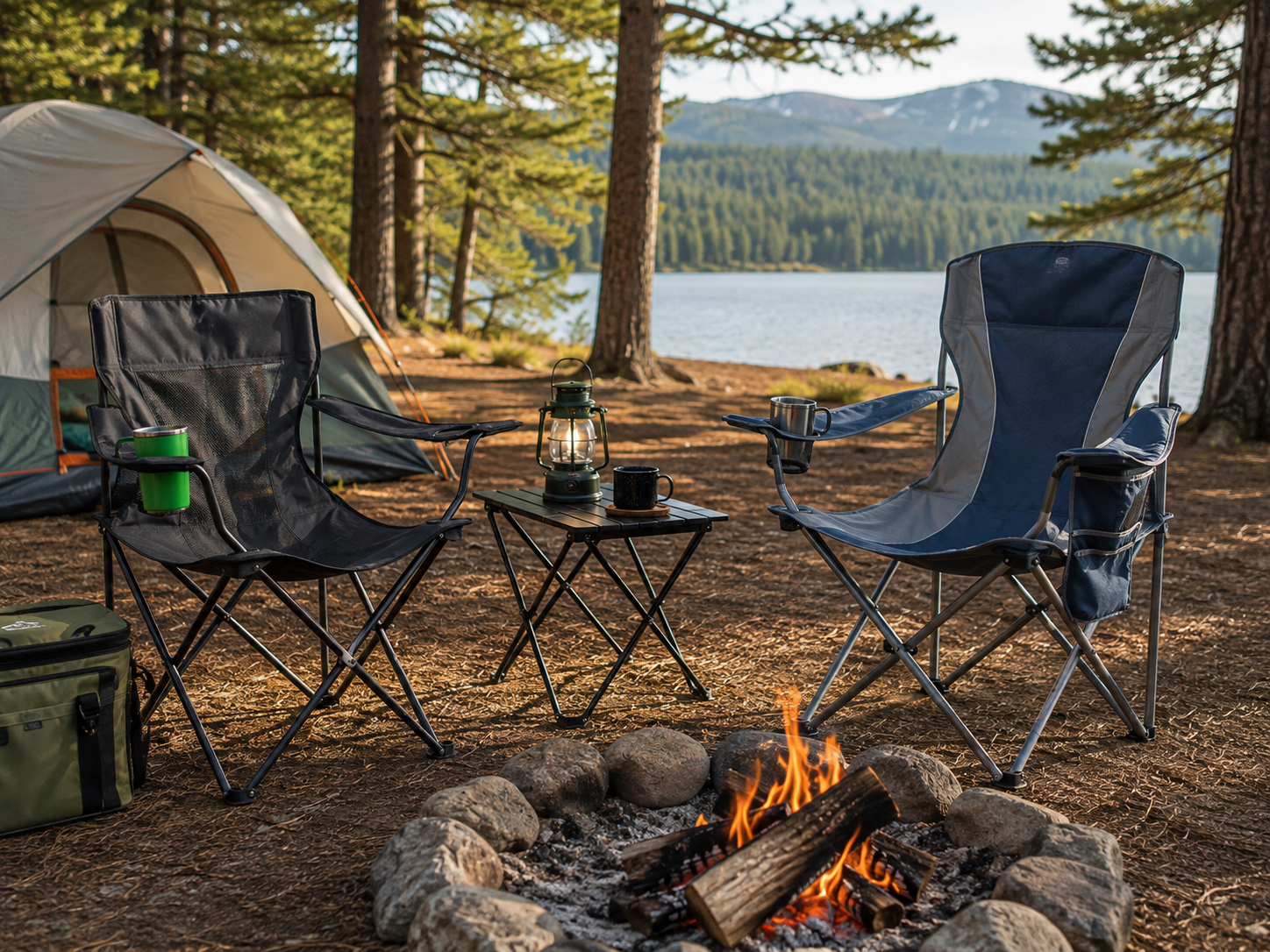
A camping chair seems like one of the simplest pieces of gear you can buy.
Open it, sit down, relax.
But once you start shopping, the choices become surprisingly different. Some chairs sit very low to the ground. Others are tall and upright. Some fold into compact bags, while others take up a large amount of trunk space. Some feel comfortable for ten minutes but become tiring after an hour around the campfire.
For most campers, especially car campers, a chair is not just an extra. It is one of the pieces of gear you may use for several hours every day.
That makes comfort, stability, packed size, and ease of use more important than they first appear.
This guide explains what to look for before buying a camping chair and how to choose one that fits the way you actually camp.
Start With How You Plan to Use the Chair
The best camping chair is not necessarily the lightest, strongest, or most expensive one.
It is the one that matches your situation.
A chair for a family campground may need to be comfortable and easy to set up, but weight may not matter much.
A chair carried to a beach or sporting event may need a shoulder strap and compact folded size.
A chair taken on a long walk from the parking area may need to be significantly lighter.
Before comparing products, ask yourself:
- Will the chair stay close to the car?
- Will you carry it very far?
- How many hours will you sit in it?
- Do you prefer an upright or relaxed seating position?
- Do you need armrests?
- Do you want a cup holder or side pocket?
- How much trunk space can you give up?
Those questions help narrow the choices quickly.
1. Seat Height Matters More Than Many People Expect
Camping chairs can sit surprisingly high or low.
Low chairs are popular because they can feel relaxed and may pack relatively small. They can also work well at beaches, concerts, or places where a lower profile is useful.
But getting in and out of a low chair can be uncomfortable for some people.
A higher chair often feels more like a regular household chair. It can be easier to stand up from and may feel better when eating at a camping table.
For general campground use, many beginners are more comfortable with a standard-height chair rather than an extremely low model.
If possible, pay attention to the listed seat height before buying.
2. Look at the Seat Width
A chair can support your weight and still feel uncomfortable if the seat is too narrow.
Camping chairs vary considerably in width.
A wider seat may provide more room to shift positions, but it usually means a larger folded chair.
A narrow chair may pack more easily but can feel restrictive during long periods of sitting.
Think about how you normally sit.
If you tend to move around, sit at an angle, or wear bulky cold-weather clothing, a little extra room can make a significant difference.
3. Check the Weight Capacity
Every chair has a recommended maximum weight.
This is not a specification to ignore.
Choose a chair with a capacity that comfortably exceeds the expected user’s body weight rather than choosing something right at the limit.
A stronger frame can also feel more stable when sitting down, standing up, or shifting position.
Heavy-duty camping chairs often use stronger steel frames, but the trade-off is additional weight and a larger packed size.
For car camping, that trade-off may be worth it.
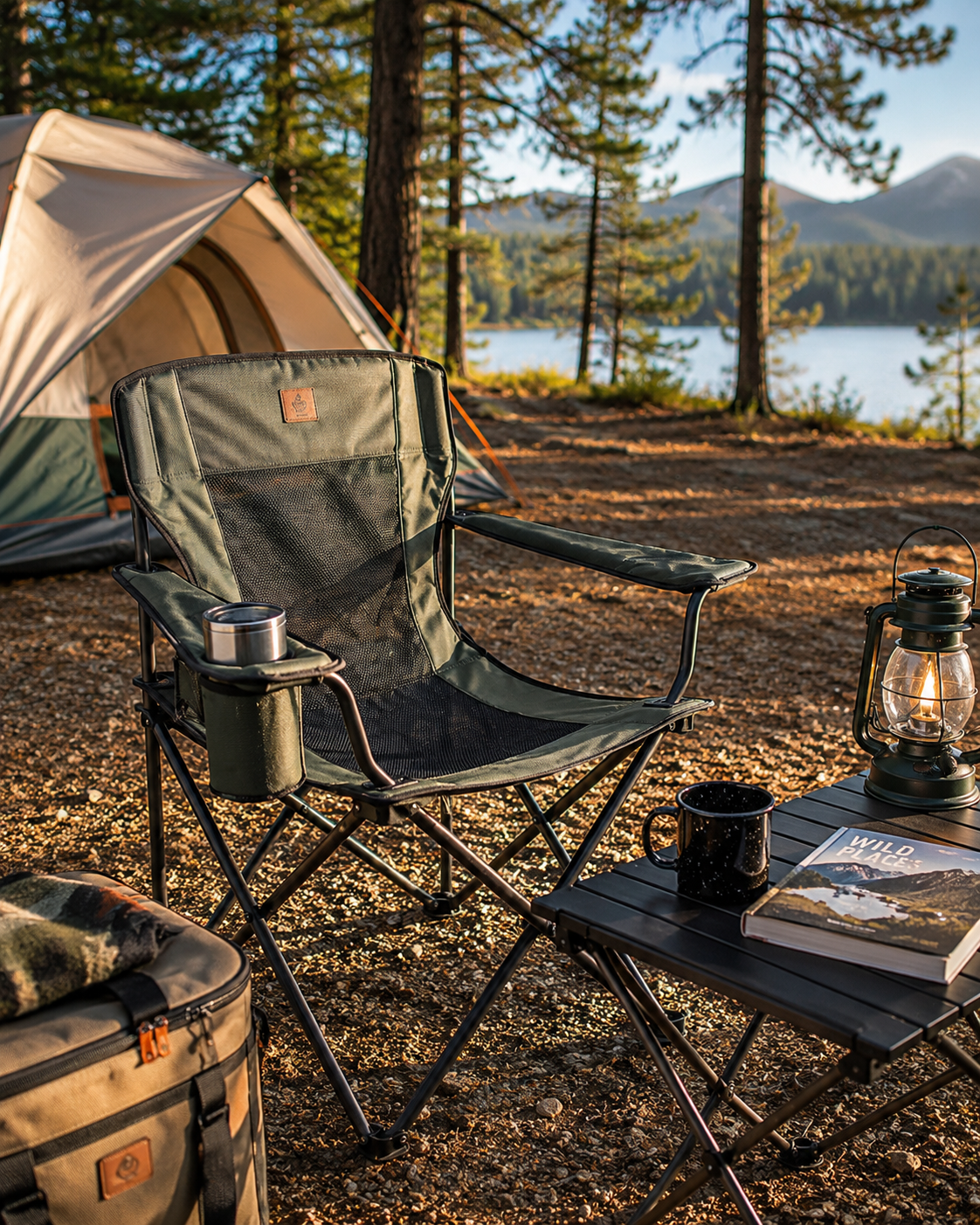
4. Pay Attention to the Backrest
Not all camping chairs support your back in the same way.
Some have short backs that stop around the lower or middle back. Others extend high enough to support the shoulders, neck, or head.
If you usually sit for only short periods, a basic backrest may be enough.
If you spend long evenings around the campfire, a higher back can be much more comfortable.
Some chairs also include:
- Padded backs
- Mesh ventilation panels
- Lumbar support
- Adjustable reclining positions
- Headrests
More features do not automatically mean more comfort, but long-term sitting comfort is worth considering if you camp regularly.
5. Decide Whether You Want an Upright or Relaxed Chair
Camping chairs generally fall somewhere between two seating styles.
Upright Seating
These chairs keep you relatively vertical.
They are useful for:
- Eating
- Playing games
- Cooking nearby
- Sitting at a camping table
- Getting in and out easily
Relaxed Seating
These chairs lean back more.
They are useful for:
- Sitting around a campfire
- Reading
- Watching the sunset
- Relaxing for long periods
Some chairs try to do both, while others are clearly designed for one position.
For a first camping chair, a slightly upright general-purpose design is often more versatile.
6. Armrests Can Make a Big Difference
Basic camp chairs often include fabric armrests with built-in cup holders.
They may look simple, but armrests can improve comfort considerably.
They also give you something to push against when standing up.
Some premium chairs use rigid or padded armrests, which may feel more stable.
The trade-off is usually weight and packed size.
If getting in and out of chairs is important to you, pay attention to how supportive the armrests appear rather than treating them as a cosmetic feature.
7. Cup Holders and Side Pockets Are Actually Useful
Small storage features can be surprisingly convenient at camp.
A cup holder keeps your drink off the ground, where it can easily be kicked over.
Side pockets can hold:
- Phone
- Flashlight
- Sunscreen
- Insect repellent
- Sunglasses
- Book
- Snacks
Some chairs even include insulated drink pockets or small side tables.
You do not need all of these features, but one or two well-placed storage areas can reduce campsite clutter.
8. Consider the Ground You Will Camp On
Campgrounds are rarely perfectly flat.
You may be placing your chair on:
- Dirt
- Grass
- Gravel
- Sand
- Rocky ground
A chair with a narrow foot can sink into soft ground more easily.
Wide feet or broader contact points distribute weight better.
Beach chairs are often designed specifically for sand, while standard folding chairs may work better on firm campground surfaces.
Stability is particularly important on uneven ground.
Always position the chair on the flattest practical surface and check that all legs are stable before sitting.
9. Steel vs Aluminum Frames
The frame material affects weight, strength, and price.
Steel Frames
Steel is common in traditional folding camp chairs.
Advantages:
- Strong
- Stable
- Usually affordable
- Suitable for car camping
Disadvantages:
- Heavier
- Can take up more space
- May be inconvenient to carry long distances
Aluminum Frames
Aluminum is often found in lighter camping chairs.
Advantages:
- Lower weight
- Easier to carry
- Often more compact
Disadvantages:
- Can cost more
- Lightweight designs may feel less substantial
- Weight capacity varies by model
Neither material is automatically better.
For car camping, steel is often perfectly practical.
For longer carries, aluminum becomes more attractive.
10. Check the Packed Size
A camping chair may look compact when opened but become surprisingly large when folded.
This matters if you already have a tent, cooler, sleeping equipment, kitchen bins, and other gear competing for trunk space.
Check both:
- Folded dimensions
- Packed shape
Traditional folding chairs usually collapse into long cylindrical carry bags.
Other chairs fold flatter or break down into smaller pieces.
If your vehicle has limited cargo space, packed dimensions may matter almost as much as comfort.
11. Weight Matters Only If You Have to Carry It
A heavy chair is not necessarily a bad chair.
If you drive directly to your campsite and unload beside your tent, an extra few pounds may be irrelevant.
But if you regularly walk half a mile from your vehicle, weight becomes much more important.
This is why buying ultralight equipment for every camping situation is unnecessary.
Match the chair to the distance you expect to carry it.
For most beginner car campers, comfort and durability should come before extreme weight savings.
12. Look at How the Chair Folds
Traditional camping chairs are popular because setup is simple.
Pull the chair out of its bag, spread the frame, and sit down.
Other compact models require assembling poles and attaching a fabric seat.
Those designs can pack much smaller, but they require slightly more setup.
Neither approach is wrong.
Ask yourself whether you value:
Fast setup
or
Small packed size
more.
For casual car camping, many people prefer the simplicity of a one-piece folding chair.
13. Do You Need Padding?
Padded chairs can feel comfortable, especially in cooler weather.
But padding adds bulk and may take longer to dry if it gets wet.
Mesh chairs generally breathe better in hot weather and dry more quickly.
Think about your typical camping climate.
For warm summer trips, breathable fabric may be more comfortable.
For cooler camping, some additional padding may be welcome.
14. Consider Weather Resistance
Camping equipment gets exposed to moisture, dirt, sunlight, and temperature changes.
Look for chair fabrics and frames designed for outdoor use.
Even so, most camping chairs last longer when they are not left outside permanently.
At the end of a trip:
- Remove dirt
- Allow damp fabric to dry
- Store the chair in a dry location
- Check the frame occasionally for damage
A little care can significantly extend the life of a basic chair.
15. Rocking and Reclining Chairs: Useful or Unnecessary?
Camping chairs now come with many comfort features.
You can find:
- Rocking chairs
- Reclining chairs
- Zero-gravity styles
- Chairs with footrests
- Loveseat-style chairs
- Oversized padded chairs
These can be very comfortable.
They can also be heavier, larger, and more expensive.
For a beginner, it usually makes sense to start with a good general-purpose chair unless you already know that a specific feature matters to you.
After a few trips, you may discover that a reclining chair is exactly what you want—or that you would rather use the trunk space for something else.
16. Oversized Chairs
Oversized camping chairs can provide extra seat width, higher weight capacity, and a more substantial frame.
They are useful for people who simply prefer more room.
However, they are also among the bulkiest camping chairs to transport.
If you are considering one, check the folded dimensions carefully.
One oversized chair may take the space of two smaller chairs in a crowded vehicle.
17. Chairs for Couples
Double camping chairs or outdoor loveseats allow two people to sit together.
They can be comfortable around the campfire and reduce the number of separate chairs you need to set up.
But they tend to be wide and bulky.
They also offer less flexibility.
With two individual chairs, each person can move their seat independently.
With a loveseat, you are effectively sharing one piece of furniture.
For most beginners, separate chairs are more versatile.
18. Do Kids Need Special Camping Chairs?
Children may be more comfortable in appropriately sized chairs.
A large adult chair can place the seat too high or make the armrests awkward to use.
Kids’ camping chairs are usually smaller, lighter, and easier for children to move.
If choosing a child’s chair, check:
- Stability
- Locking mechanisms
- Age guidance
- Weight capacity
- Pinch points
Adult supervision is still important around folding equipment and campfires.
19. How Much Should You Spend?
Camping chairs are available at almost every price level.
A beginner does not need to buy the most expensive option.
Think in terms of use.
If you camp once or twice each year, a basic folding chair may be completely adequate.
If you camp frequently and spend long evenings sitting outdoors, paying more for better support and construction may make sense.
The most expensive chair is not automatically the most comfortable chair for you.
Features, dimensions, and seating position matter more than the brand name alone.
20. Common Camping Chair Buying Mistakes
A few mistakes appear repeatedly.
Buying Based Only on Appearance
A chair may look great but sit too low, feel narrow, or provide poor back support.
Ignoring Folded Size
Four bulky chairs can consume a surprising amount of vehicle space.
Buying Ultralight Gear for Car Camping
Paying extra to save weight is unnecessary if the chair travels ten feet from your trunk to the campsite.
Ignoring Weight Capacity
Choose a chair with an appropriate safety margin.
Choosing Too Many Features
Recliners, footrests, tables, coolers, and extra padding can be useful, but they also make chairs heavier and more complicated.
Start with the features you know you will actually use.
What Should a Beginner Look For?
For a typical first car-camping chair, a practical combination would be:
- Standard seat height
- Comfortable seat width
- Strong frame
- Appropriate weight capacity
- Supportive backrest
- Armrests
- Cup holder
- One small storage pocket
- Easy folding design
- Carry bag or handle
- Reasonable packed size
You do not need much more than that.
A Simple Way to Compare Camping Chairs
When comparing two chairs, ignore the marketing language for a moment and look at six things:
1. Seat height
Will it be easy for you to sit down and stand up?
2. Seat width
Will you have enough room to sit comfortably?
3. Weight capacity
Is there an appropriate safety margin?
4. Chair weight
Will you actually need to carry it far?
5. Folded size
Will it fit easily with the rest of your camping gear?
6. Back and arm support
Will it still feel comfortable after an hour?
Those six factors usually tell you more than a long list of extra features.
Final Thoughts
A camping chair is easy to overlook when you are focused on tents, sleeping bags, and cooking equipment.
But once camp is set up, your chair may become one of the most frequently used pieces of gear you brought.
The right choice depends less on finding the “best camping chair” and more on understanding how you camp.
For most beginners, prioritize:
Comfort, stability, appropriate size, easy setup, and reasonable packed dimensions.
If you camp beside your vehicle, there is little reason to sacrifice comfort simply to save a few pounds.
Start with a dependable general-purpose chair. After spending a few trips around the campsite, you will know whether you really need a lighter chair, a higher back, extra padding, a rocking design, or something more specialized.
Buying around your actual camping habits is usually smarter than buying around the longest feature list.