
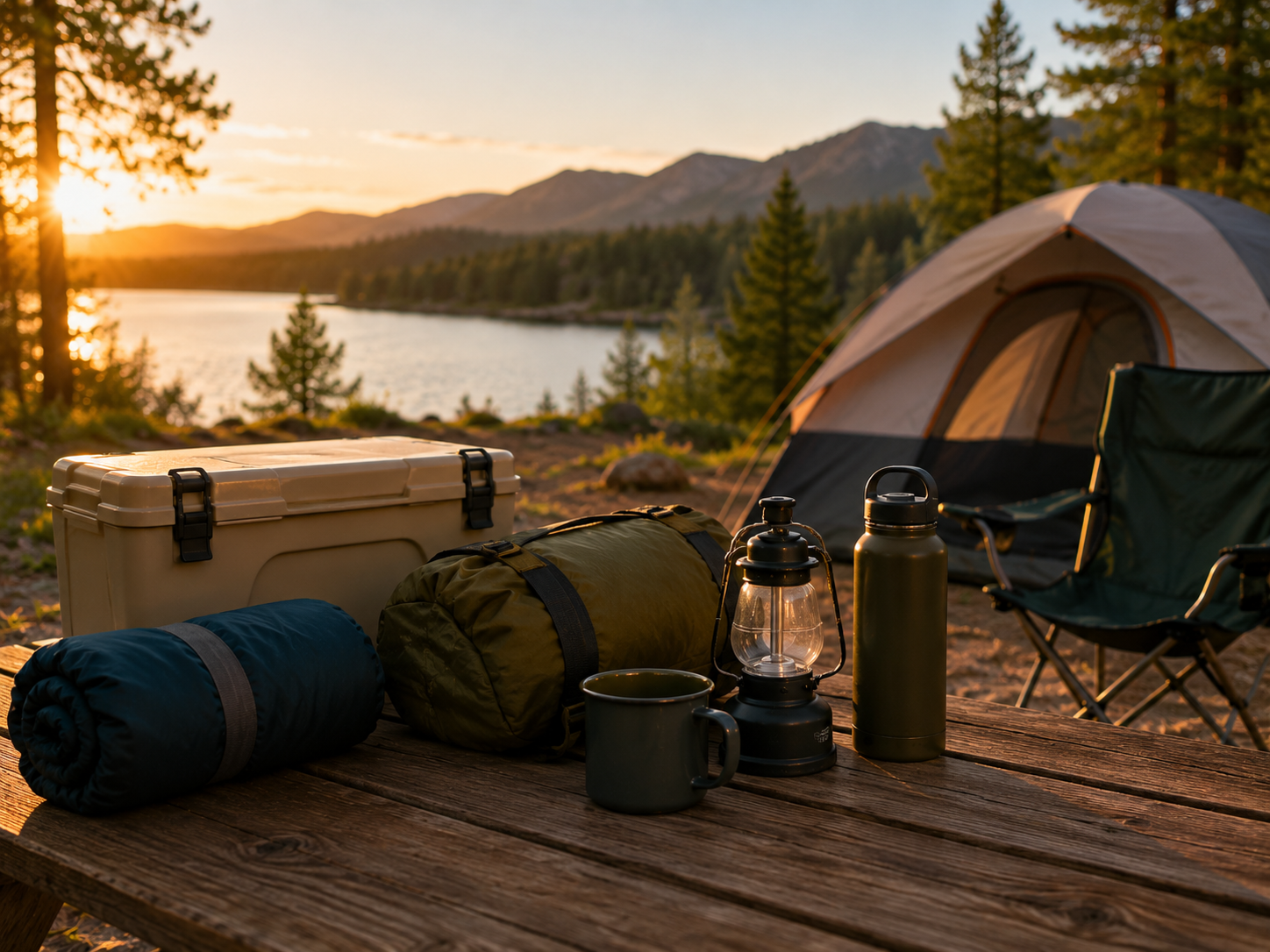
Planning your first camping trip can get expensive surprisingly fast.
You start with the obvious things—a tent and a sleeping bag—and before long your shopping list includes a folding kitchen, multiple lanterns, portable power stations, special camping dishes, storage systems, and gadgets you did not know existed a few minutes earlier.
The problem is not that those products are useless. Many of them can make camping easier.
The problem is that you probably do not need most of them for your first trip.
For a beginner, the goal should be much simpler. You need enough gear to stay dry, sleep comfortably, prepare food, see after dark, and deal with normal changes in weather.
Everything else can come later.
If you are planning a first weekend at an established campground, here is the camping gear that deserves space in your car—and the gear you can probably leave at the store for now.
Start With the Kind of Camping You Are Actually Doing
Camping gear lists can become confusing because they often mix several very different types of camping together.
A backpacker walking several miles into the wilderness needs lightweight, compact equipment.
Someone driving directly to an established campsite does not.
For most beginners, car camping is the easiest way to start. You drive to or near your campsite and carry your equipment only a short distance.
That means you can prioritize comfort over weight.
You can bring a larger tent, a comfortable sleeping pad, a proper cooler, folding chairs, and even pillows from home.
Before buying anything, check the campground itself.
Find out whether it provides:
- Drinking water
- Restrooms
- Showers
- Picnic tables
- Fire rings or grills
- Electrical hookups
- Food-storage lockers
Knowing what is already available can save you from buying or packing equipment you do not need.
1. A Tent That Gives You Enough Space
A tent is usually the first major piece of camping gear beginners think about, and it is worth choosing carefully.
Do not assume that the capacity number tells you how spacious a tent will feel.
A 2-person tent is designed to fit two sleeping people, but that does not necessarily mean two people plus backpacks, clothes, shoes, and other gear will fit comfortably.
For car camping, going slightly larger is often worthwhile.
A couple may prefer a 3- or 4-person tent. A family may also benefit from choosing more capacity than the minimum number of sleepers requires.
Look for practical features such as:
- A rainfly
- Good ventilation
- A waterproof or water-resistant floor
- Interior storage pockets
- Easy-to-understand poles
- A vestibule or covered entrance
- Enough height for your preferred level of comfort
For your first camping trip, an easy setup is usually more useful than shaving a few ounces from the tent’s weight.
Do a Practice Setup at Home
Do not wait until you arrive at camp to open your tent for the first time.
Set it up once in your yard or another suitable space.
You will learn where the poles go, how the rainfly attaches, and whether anything is missing.
That simple practice can make your first campsite setup much less stressful.
2. Something Comfortable to Sleep On
A sleeping bag is important, but the surface underneath you can make an even bigger difference to how well you sleep.
The ground is hard, uneven, and often colder than beginners expect.
Your main options include:
Foam Sleeping Pads
Simple and durable with almost nothing to break.
They are not usually the softest option, but they provide useful insulation from the ground.
Self-Inflating Sleeping Pads
These provide more cushioning while still being reasonably compact.
They work well for campers who want more comfort without bringing a large mattress.
Inflatable Camping Pads
These can provide excellent comfort and pack down relatively small.
The trade-off is that they need inflation and can potentially be punctured.
Air Mattresses
For car camping, an air mattress can be a perfectly reasonable choice.
It takes up more room and requires a pump, but if sleeping comfortably is your priority, weight may not matter.
For your first trip, choose based on comfort and available vehicle space, not on what looks most adventurous.
3. A Sleeping Bag That Matches the Temperature
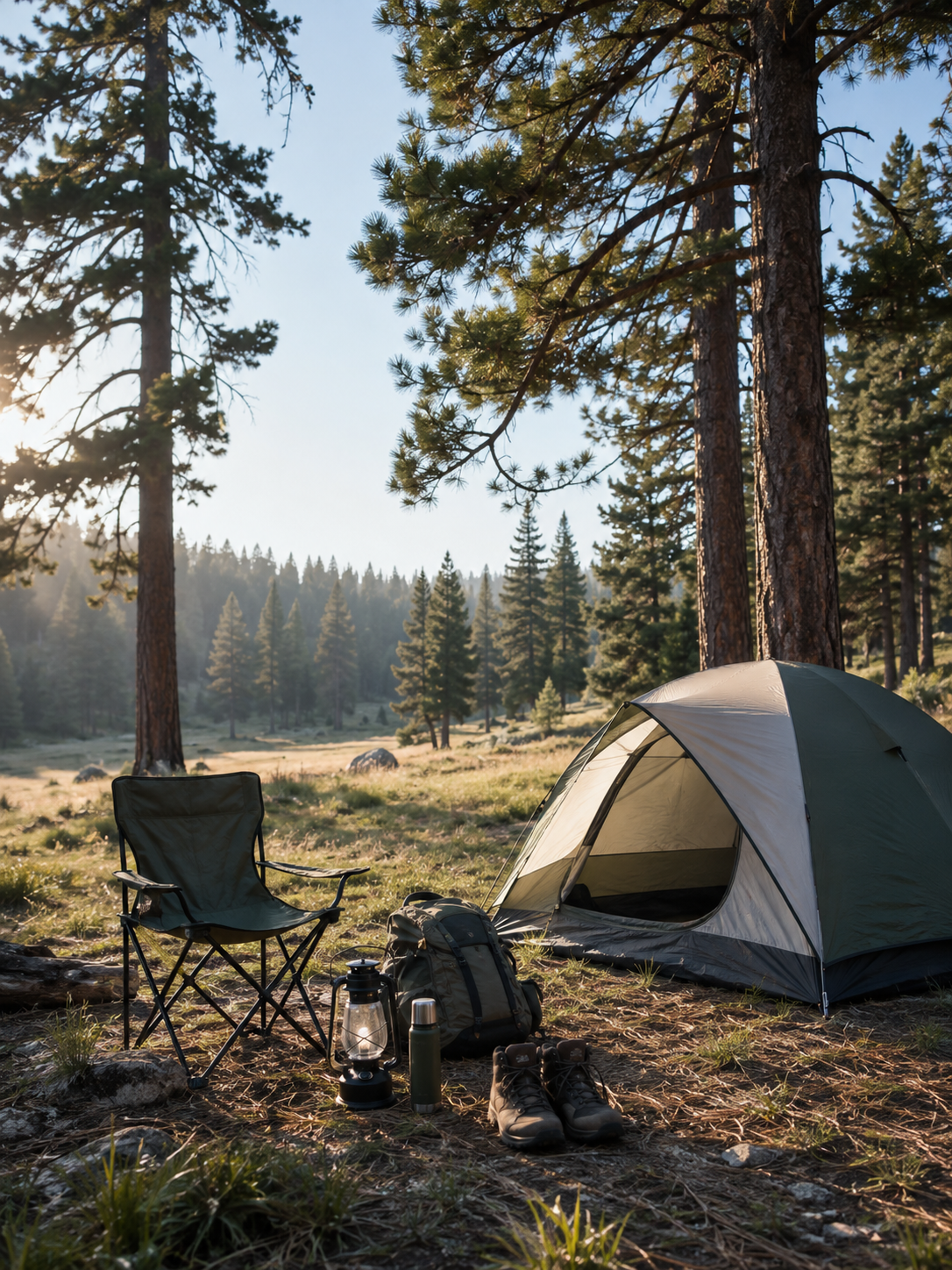
A sleeping bag helps keep your body warm through the night, but you need one suited to the conditions.
Check the expected nighttime temperature at your destination rather than focusing only on daytime weather.
Temperatures can drop significantly after sunset.
Choose a sleeping bag appropriate for the conditions, with some extra margin if you tend to sleep cold.
You may encounter two common shapes.
Rectangular Sleeping Bags
Roomier and easier to move around in.
They are popular for mild-weather car camping.
Mummy Sleeping Bags
More fitted around the body and generally better at retaining heat.
They are useful for colder conditions but may feel restrictive if you prefer lots of sleeping space.
You do not need a specialized high-end bag for an ordinary summer campground trip.
You need one that matches the weather.
4. A Pillow and Extra Blanket
This is where beginners sometimes overcomplicate things.
If you are camping next to your vehicle, you do not necessarily need a specialized inflatable camping pillow.
You can bring your normal pillow from home.
The same applies to blankets.
An extra blanket is useful if the temperature drops more than expected or someone simply feels cold.
After several trips, you can decide whether compact camping bedding would make packing easier.
For your first trip, familiar and comfortable is perfectly fine.
5. A Headlamp for Each Person
If I had to choose between a flashlight and a headlamp for camping, I would usually choose the headlamp.
Why?
Because your hands remain free.
That matters when you are:
- Setting up a tent
- Cooking
- Washing dishes
- Searching through a bag
- Walking to a restroom
- Holding onto a child
- Carrying supplies
One headlamp per person is ideal.
Check the batteries before leaving and bring spare batteries or a way to recharge rechargeable models.
6. One Good Camping Lantern
A headlamp helps you move around.
A lantern helps illuminate the campsite itself.
You can place a lantern on a picnic table while eating or hang it inside your tent.
For a beginner campsite, you usually do not need several lanterns.
Start with one general-purpose lantern that has adjustable brightness.
Useful features include:
- Low and high brightness settings
- Rechargeable battery
- Battery indicator
- Hanging hook
- Weather resistance
- Simple controls
You can always add more campsite lighting later if you discover you need it.
7. A Comfortable Camping Chair
If your campground has a picnic table, you technically have somewhere to sit.
That does not mean you will want to sit on a wooden bench for several hours in the evening.
A simple folding camping chair can dramatically improve campsite comfort.
For beginners, look for:
- Comfortable seat height
- Adequate width
- Appropriate weight capacity
- Supportive back
- Armrests
- Cup holder
- Easy folding design
For car camping, you usually do not need to pay extra for an ultralight chair.
Choose comfort first.
8. A Cooler
If you plan to bring meat, dairy products, eggs, drinks, or other items that need to stay cold, a cooler becomes one of your most useful pieces of camping gear.
A basic insulated cooler can work well for a short weekend trip.
You can improve its performance by:
- Chilling food before packing
- Starting with a cold cooler
- Using plenty of ice or frozen packs
- Keeping it out of direct sunlight
- Opening it only when needed
You do not necessarily need a premium cooler costing several hundred dollars for your first trip.
Match the cooler to your trip length and food needs.
9. A Simple Camping Stove
A campfire may look like the obvious way to cook outdoors, but relying entirely on one can create problems.
Fires may be restricted because of weather or wildfire conditions. Firewood may be unavailable or wet. Some campsites may not allow fires at all.
A basic camping stove gives you a predictable way to prepare meals.
For many first-time car campers, a simple one- or two-burner stove is enough.
Remember the appropriate fuel and ignition method.
Use outdoor cooking equipment only in appropriate outdoor locations and follow the manufacturer’s safety instructions.
10. Only the Cookware You Will Actually Use
You do not need an entire specialized camping cookware collection.
Think about what you plan to cook first.
For simple weekend meals, you might only need:
- One pot
- One frying pan
- Spatula or cooking spoon
- Knife
- Cutting board
- Plates or bowls
- Cups
- Forks and spoons
You may already have suitable inexpensive items at home.
There is nothing wrong with using them for your first trip.
After camping a few times, you will know whether dedicated nesting cookware or compact utensils would actually improve your setup.
11. Drinking Water
Water is something you should plan before arriving at camp.
Check whether the campground provides potable drinking water.
If it does, refillable bottles plus a larger water container may be enough.
If it does not, you need to bring enough water for your group.
Remember that water is needed for more than drinking.
You may also use it for:
- Cooking
- Coffee
- Washing
- Cleaning
- Basic hygiene
A reusable water container with a spigot can make campsite life much easier.
Place it near your camp kitchen and you have a simple water station.
12. A Few Storage Bins
Camping becomes frustrating quickly when everything is piled together.
You do not need an elaborate organization system.
A few bins can make a huge difference.
One simple approach is:
Kitchen Bin
Cooking utensils, stove accessories, cleaning items, and dry kitchen supplies.
Food Bin
Snacks and non-refrigerated food.
Campsite Gear Bin
Lanterns, tools, cords, insect repellent, and miscellaneous equipment.
Clear plastic bins work especially well because you can see what is inside without opening every container.
They also stack efficiently in many vehicles.
13. A Basic First-Aid Kit
You do not need to prepare for every possible medical situation, but minor problems are common outdoors.
A basic kit should help you deal with things such as:
- Small cuts
- Scrapes
- Blisters
- Minor burns
- Splinters
Bring any personal medications you require as well.
Keep the kit somewhere accessible rather than buried under everything else in the vehicle.
Also know how to reach appropriate help from your campsite if something more serious happens.
14. Sunscreen and Insect Repellent
These are inexpensive items that can have a surprisingly large effect on whether a camping trip feels enjoyable.
Bring sunscreen appropriate for your needs and reapply it as directed.
Insect repellent can make evenings significantly more comfortable in places with mosquitoes or other biting insects.
Keep both somewhere obvious so they are easy to use.
If they disappear to the bottom of a storage bin, people tend to forget about them.
15. Clothing for Changing Weather
A sunny afternoon does not guarantee a warm night.
Bring layers that allow you to adjust as temperatures change.
Depending on the conditions, that may include:
- Lightweight shirt
- Warm layer
- Rain jacket
- Long pants
- Comfortable sleep clothing
- Extra socks
- Appropriate footwear
An extra dry set of clothes is useful if rain is possible.
Keeping it inside the tent or car can prevent one wet afternoon from turning into an uncomfortable night.
16. Trash Bags
Trash bags deserve a permanent place on a camping checklist.
They obviously hold garbage, but they are also useful for:
- Dirty clothing
- Wet towels
- Muddy shoes
- Damp equipment
Bring more than one.
Follow the campground’s rules for waste disposal and take your trash with you when required.
A clean campsite is easier to live in and less likely to attract animals.
17. Basic Cleaning Supplies
Camp cleanup does not require much.
A simple kit might contain:
- Small wash basin
- Sponge
- Cleaning cloth
- Appropriate soap
- Paper towels
- Trash bags
Check campground guidance for washing dishes and disposing of wastewater.
Avoid leaving food scraps or dirty water around your sleeping area.
18. A Small Repair Kit
You do not need a full toolbox.
A few items can handle many annoying little problems.
Consider:
- Multi-tool
- Duct tape
- Tent repair patches
- Extra cord
- Spare tent stakes
- Small scissors
You may never use them.
But if a tent pole connection, strap, bag, or piece of fabric fails, a temporary repair can keep a small problem from ending the trip.
19. A Power Bank
Your phone may serve several purposes while camping.
You may use it for:
- Maps
- Weather
- Reservations
- Photos
- Communication
- Emergency information
For a short weekend trip, a modest power bank is often enough.
You do not automatically need a large portable power station.
Those become useful when your camping style involves more electronics or longer periods away from power.
Start small.
Upgrade only when you know what you actually need to charge.
20. Your Campsite Information
This does not come in a camping gear box, but it is essential.
Before leaving home, save:
- Campground name and address
- Reservation information
- Campsite number
- Check-in time
- Campground rules
- Fire restrictions
- Water information
- Local weather
- Emergency information
Screenshot or download anything important in case you have poor cell service at the campground.
What You Probably Do Not Need for Your First Trip
Camping equipment is fun to shop for, which makes it easy to convince yourself that everything is essential.
It isn’t.
For a simple first car-camping weekend, you can probably wait before buying things such as:
- Large portable power stations
- Full camping kitchen cabinets
- Multiple specialized lanterns
- Expensive outdoor coffee systems
- Portable showers
- Oversized awnings
- Specialized camp furniture
- Large collections of camping cookware
- Decorative campsite accessories
- Multiple knives and tools
- Premium storage systems
Some of those items are excellent once you know you will use them.
But buying them before your first trip means you are trying to solve problems you may never have.
What Should You Spend More Money On?
Not every piece of camping gear deserves the same portion of your budget.
For beginners, I would put more attention into the items that affect sleep and shelter.
That means:
Tent
You need something dependable enough for the expected weather.
Sleeping pad or mattress
Poor sleep can make the entire trip unpleasant.
Sleeping bag
It needs to be appropriate for the expected temperature.
Everything else can be fairly simple in the beginning.
A basic chair works.
A basic lantern works.
A regular cooler can work.
Cookware from home can work.
You can upgrade those items later without fundamentally changing your ability to camp.
A Simple First-Trip Camping Gear List
If the entire article feels like too much information, reduce it to this.
Shelter
- Tent
- Rainfly
- Stakes
Sleep
- Sleeping bag
- Sleeping pad or mattress
- Pillow
- Extra blanket
Lighting
- Headlamp for each person
- Lantern
Campsite Comfort
- Folding chair
Food and Cooking
- Cooler
- Food
- Drinking water
- Camping stove
- Fuel
- Lighter
- Pot or pan
- Basic utensils
- Plates or bowls
- Cups
Organization
- Storage bins
- Trash bags
Personal and Safety
- First-aid kit
- Personal medication
- Sunscreen
- Insect repellent
- Weather-appropriate clothing
Useful Extras
- Power bank
- Multi-tool
- Repair tape
For a normal campground weekend, that is already a very capable camping setup.
Buy Gear After You Discover a Problem
This may be the most useful rule for a beginner.
Do not build your camping setup by asking:
What else can I buy?
Build it by asking:
What problem did I have on my last trip?
Maybe your first trip teaches you that your sleeping pad is uncomfortable.
Upgrade the sleeping pad.
Maybe cooking utensils are scattered everywhere.
Improve the kitchen storage.
Maybe your tent gets unbearably hot in summer.
Research ventilation or a suitable tent fan.
Maybe the chairs are uncomfortable.
Upgrade the chairs.
This approach gives every future purchase a purpose.
It also reduces the chance of filling your garage with camping gear that rarely leaves home.
Your First Camping Setup Does Not Need to Look Perfect
It is easy to see beautifully organized campsites online and think you need to recreate them immediately.
You don’t.
Your first campsite might have mismatched chairs, a cooler you already owned, a pillow from your bedroom, and kitchen utensils from a drawer at home.
That is completely fine.
The first few trips are where you learn what kind of camper you are.
Some people eventually want an elaborate camp kitchen.
Others are happy cooking one-pan meals on a small stove.
Some want a large family tent with standing room.
Others prefer something compact.
Some bring string lights and rugs.
Others want as little gear as possible.
There is no single correct camping setup.
Final Thoughts
You do not need to buy everything labeled “camping gear” before spending your first night outdoors.
Start with the things that solve basic needs.
You need shelter from the weather, a comfortable place to sleep, adequate food and water, reliable lighting, appropriate clothing, and a few basic safety items.
After that, camping gear becomes much more personal.
Your first trip will tell you more about what you need than hours spent browsing product pages.
Start with a simple setup, pay attention to what works and what frustrates you, and improve one problem at a time.
That way, the gear you eventually buy will have a reason to be in your camping setup—and a much better chance of actually being used.